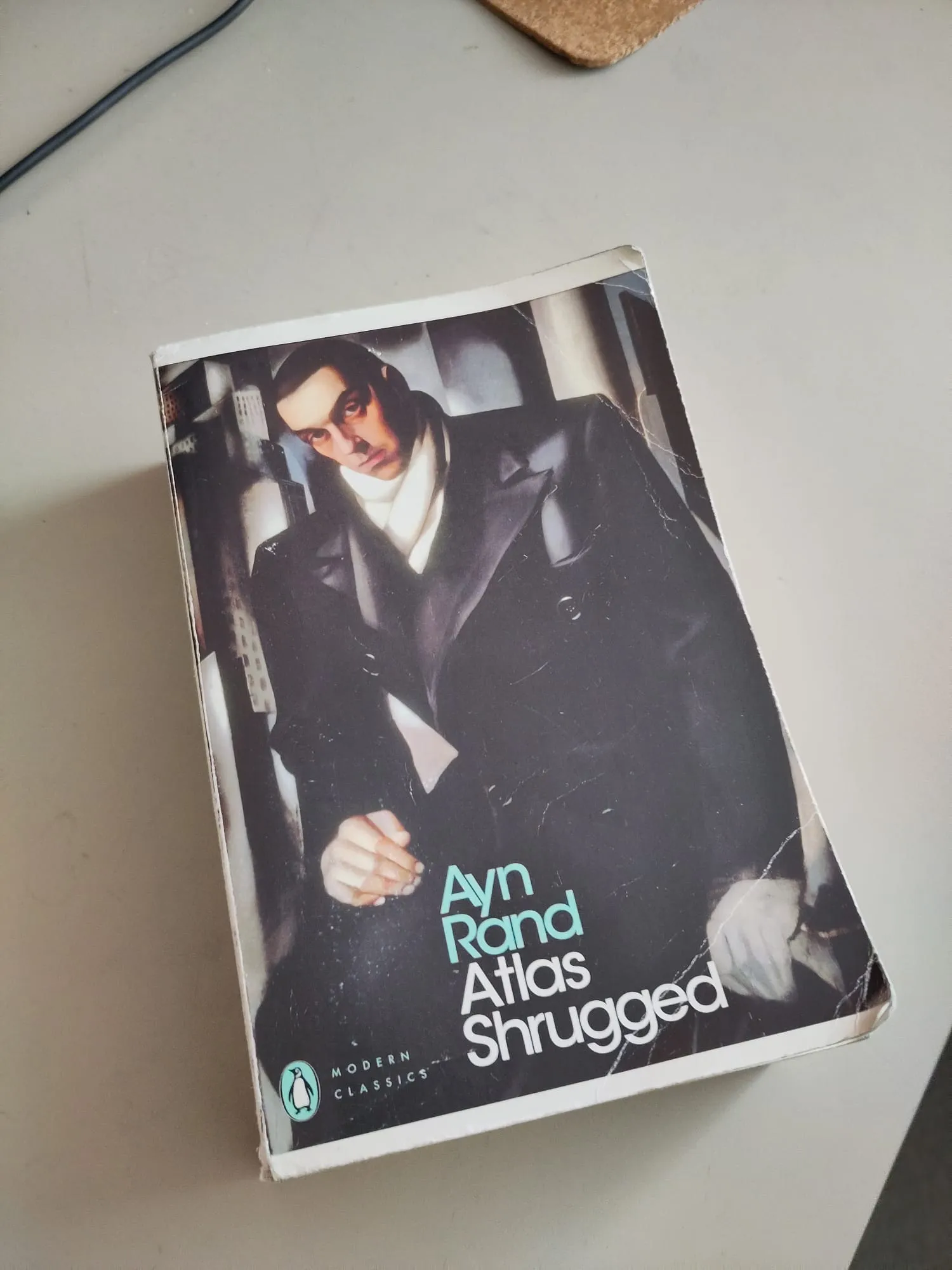
Book Review - Atlas Shrugged
They say don’t judge the book by its cover, and you shouldn’t but the copy I picked up had an image by Tamara Lempicka, which accurately represents the feeling I got throughout reading the book. The Polish painter is famous for her work in art deco style, which was popular in 1920-30s and represented “luxury, glamour, exuberance, and faith in social and technological progress.”
The novel, written in 1957, does include all of those things. It is a piece of art in literature, a view into someone’s mind, with certain style, omissions and selective depth. It is a collection of ideas, stories and characters, which form the plot, not always fully revealed or explained, but that is the style.
It doesn’t read like a long book, it’s like one of those 3hr movies where it doesn’t feel too long.
There is only one section I skimmed, it is towards the end - there are a couple of memorable monologues and each brings new ideas into the story with them, however, the one at the end goes over the same things already covered in the book, and the format doesn’t match the setting. So I found that part daunting, unlike the rest.
Despite the continuous hardships encountered by the characters, I found many sections of it inspiring. Some of the themes is touches on: strength of human character; determination and pursuit of goals; interest and curiosity; purpose and living one’s own life; value of production vs power to take it away; corruption, politics, power and even marriage!
It’s art, it doesn’t have to be perfect. It’s not a photograph. It doesn’t capture the full spectrum of human relationships in the complex world we live it, but it does provide a widely-critiqued angle, even if extreme in some ways, to look at our life from. Considering when it was written and the writer’s background, it offers a valuable perspective into that time, a step in our evolving conversation about the world.
On a personal note, I also couldn’t help but draw some comparison to what it happening today in Russia. People are leaving, and the government control is tightening. People who are stifled by the control and don’t want to work for the regime, leave, abandon their life. They go on to build a new one, pursue their dreams. The people who remain either by choice or out of lack of options, observe new narratives being developed and applied together with censorship to justify the new changes.